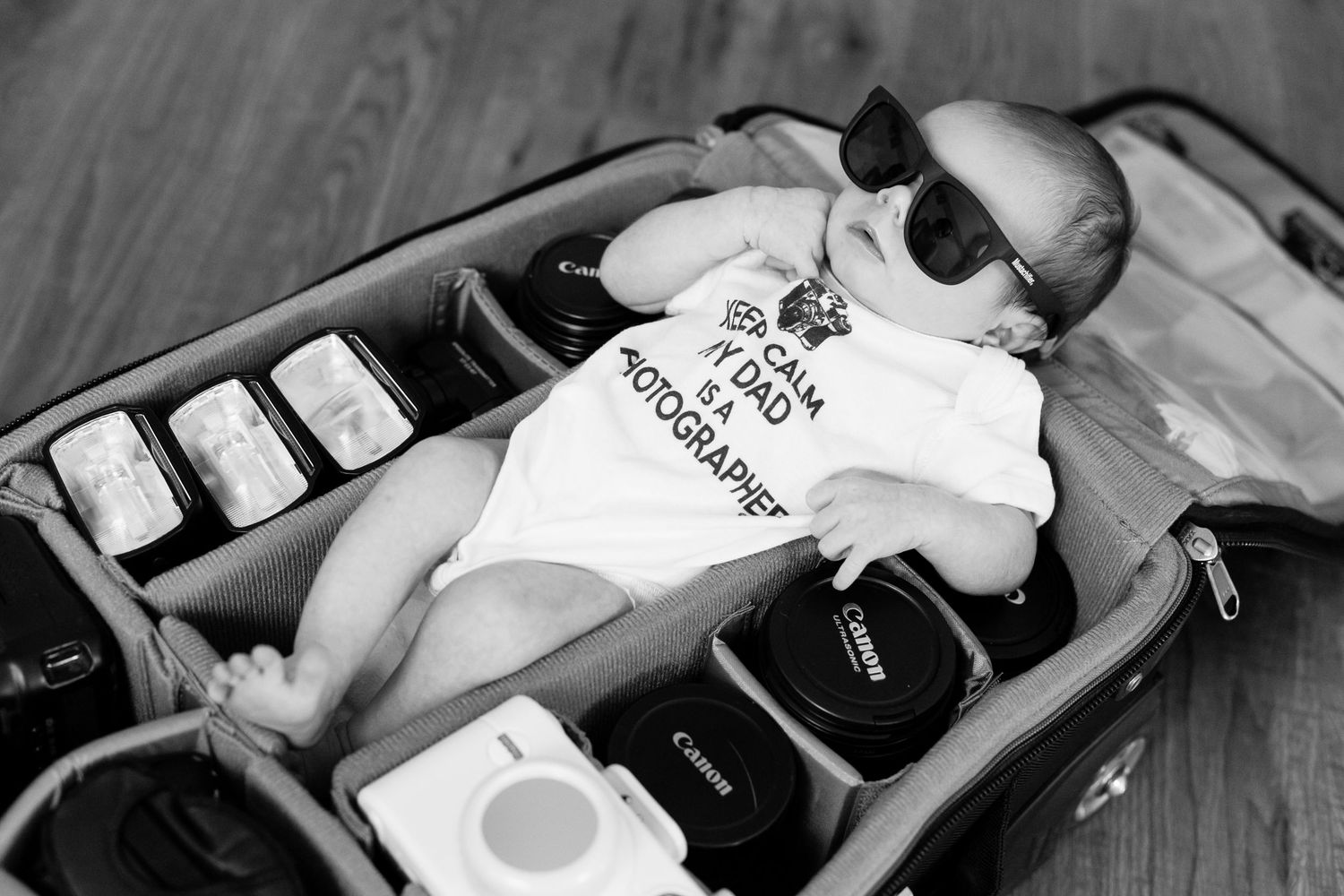
A wedding photographer we've coached told us, right before she booked her first corporate client, that one of the things holding her back wasn't confidence or connections. It was her camera bag. She was convinced that stepping into a ballroom full of executives meant showing up with an entirely different kit than the one she'd used at a hundred weddings.
She's not alone. It's one of the most common things we hear from photographers who are ready to make the move from weddings to corporate events: some version of "I don't have the right gear yet." So on a recent episode of Hocus Focus, we did something a little different. Instead of talking in generalities, Don interviewed Emily about literally everything in her bag for a corporate shoot — camera bodies, lenses, lighting, cards, and the small stuff nobody talks about. Here's what we covered, and why the gear question matters less than you think.
You Probably Already Own What You Need
Emily shoots Canon. Don shoots Sony. Twenty years into running The Signature Studio together, they still don't agree on a brand — and it's never mattered. What matters is having two camera bodies (for redundancy and to avoid constantly swapping lenses), and two zoom lenses that cover your range: something like a 24-70mm and a 70-200mm, both with a fixed f/2.8 aperture.
That fixed aperture is the expensive part — it's why a 70-200mm f/2.8 runs $3,000 to $3,500 instead of a few hundred dollars. But it's also the piece of glass Emily uses more than anything else at a corporate event, because it lets her react fast: wide shots, tight shots, all at one focal length, without losing light as she zooms.
If you don't have that lens yet, you don't need to buy it blind. Emily has rented lenses for as little as $35 to $40 for an entire weekend before committing to a purchase — testing them on real shoots, not just in a parking lot. She's also bought used, borrowed from other photographers, and leaned on local camera stores for gear she only needed once or twice. The point isn't that gear is free. It's that you have options besides "buy it new, buy it now."
The Small Stuff That Actually Gets Used
Beyond the two workhorse zooms, Emily's bag includes a couple of prime lenses — a lightweight 16mm she throws on a monopod and raises overhead to capture the scale of a room, and a 50mm she uses for quiet, unobtrusive shots of VIPs in the front row, where a flash would be a distraction. Neither of those lenses cost anywhere near what the zooms do. They're just the right tool for a specific job.
Then there's lighting: two battery-powered speed lights, a larger studio head for bigger rooms, tall light stands that can reach eight to ten feet (corporate stages sit much higher than a wedding arch ever will), and the brackets and modifiers to shape it all. None of it is exotic. Most of it is available secondhand or through the same camera stores that sell wedding photographers their gear.
And in the bag alongside all of that: gaffer tape, extra batteries in the right brand for each camera body, lens cloths (which get used constantly — those glass awards clients hand out show every fingerprint under stage lighting), cough drops, snacks, and a rocket blower for cleaning sensors. None of that shows up in a "top corporate photography gear" listicle. All of it gets used on almost every shoot.
Where the Money Actually Matters: Cards
If there's one place Emily and Don both said not to cut corners, it's camera cards. Not because expensive cards are inherently better, but because a failed card doesn't just cost you the price of the card — it costs you a client's images. They shoot on two cards simultaneously in-camera specifically so a card failure never means data loss, and they've had cards fail over twenty years without ever losing a shoot's worth of images because of that redundancy. It's the one gear expense they treat as non-negotiable, and it's gotten more expensive across the board as hard drives and camera cards have climbed in price industry-wide.
Why the Real Gap Isn't the Gear
Here's the pattern underneath all of it: almost everything in Emily's bag is either something a working wedding or portrait photographer already owns, or something they can rent, borrow, or buy used for far less than they'd expect. The photographers we see get stuck aren't stuck because of their equipment. They're stuck because nobody's shown them how to use what they already have in a corporate room — how to light a breakout space that will never get production lighting, how to read a ballroom's existing lighting and know when to supplement it, how to work a stage without being a distraction to the audience.
That's the actual gap. And it's a knowledge gap, not a gear gap — which is good news, because knowledge is something you can build a lot faster than you can save up for a new lens.
If you've been telling yourself you need to fully re-outfit your bag before you can take on a corporate client, take an honest inventory first. You likely have more of what you need than you think — and the rest is a weekend rental away.
Listen to the full episode of Hocus Focus for the complete rundown of what's in Emily's bag, lens by lens, including the specific lighting setup she uses for breakout rooms and the exact camera cards they trust after twenty years of shooting corporate events.
The full playbook for landing corporate clients is at themamones.com/playbook.